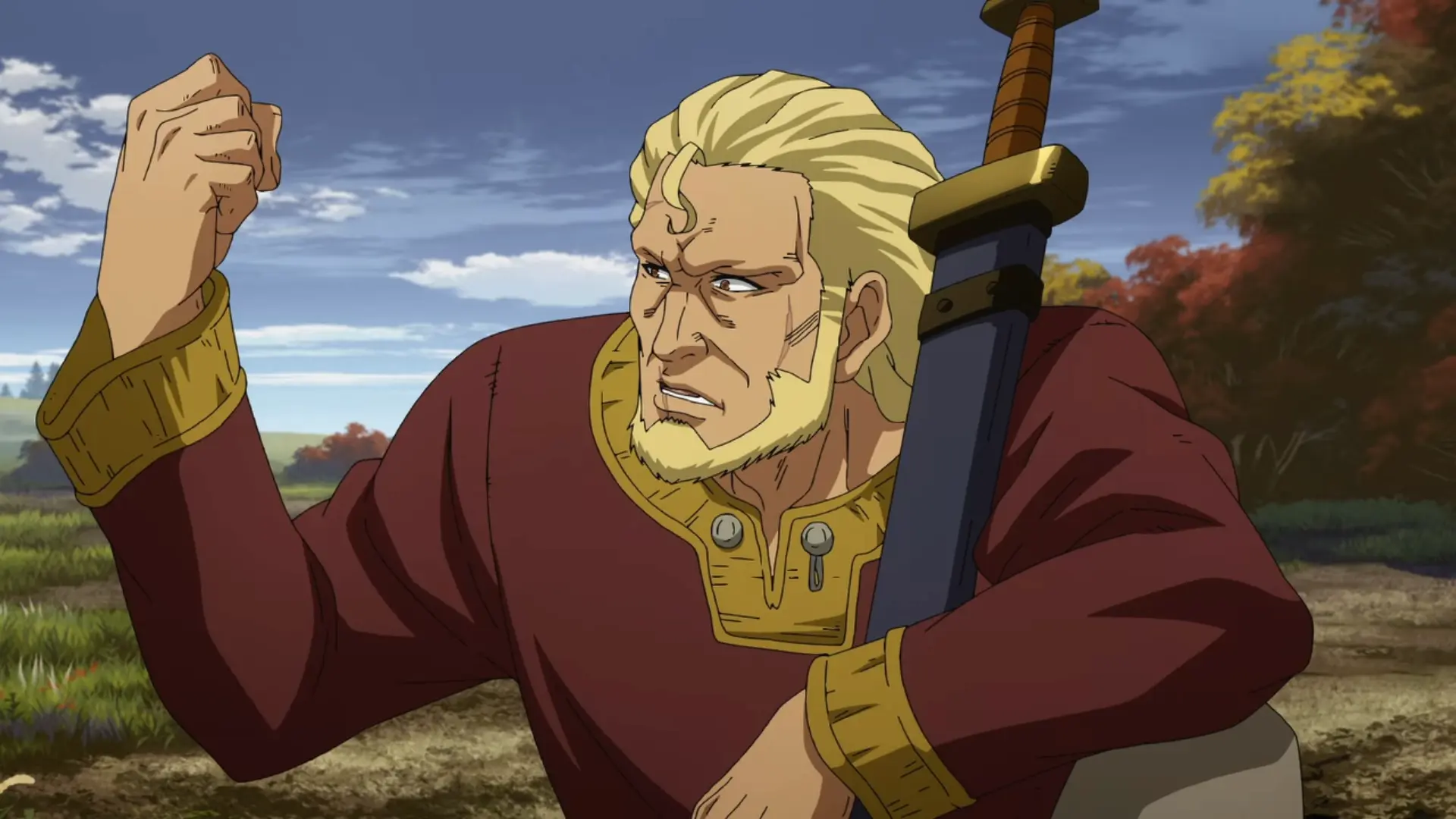
In the broad spectrum of characters inhabiting the Ketil’s Farm arc in Vinland Saga, Thorgil stands as a brutal reminder of the reality Thorfinn is desperately trying to leave behind. While Ketil lives in a lie of strength and Olmar in a dream of childhood glory, Thorgil is the honest and ruthless embodiment of the Viking era. He makes no apologies for his violence; he celebrates it as the only absolute truth of human existence.
His presence in the story serves to confront the reader with an uncomfortable question: is peace a natural state or simply a fragile truce we maintain out of fear? Thorgil despises hypocrisy. He sees in his father the weakness of one who desires power but fears blood, and in his brother the foolishness of one who desires war without knowing pain. For Thorgil, the world is not divided into good and bad, but into those who have the strength to impose their will and those destined to be trampled.
"No matter how much you try to hide it under layers of civilization and laws... deep down, man only feels truly alive when he is on the battlefield."
This phrase encapsulates Thorgil's optimistic nihilism. For him, war is not a means to an end—it’s not for land or gold; it is the end in itself. It is the only place where all social pretenses fade away, leaving the pure essence of the individual. Thorgil is, in many ways, the "perfect warrior" that Thorkell would admire, but with a far more pragmatic and less playful cruelty. His logic is biological: predators hunt, warriors kill.
Analyzing Thorgil from a philosophical perspective, we find echoes of Thomas Hobbes' "state of nature," where life is "solitary, poor, nasty, brutish, and short" due to the war of all against all. However, where Hobbes sees a tragedy to be avoided through a social contract, Thorgil sees a playground. He rejects Thorfinn's concept of redemption not because it is difficult, but because he considers it a denial of human nature. To Thorgil, a Thorfinn who does not fight is a wounded animal that has forgotten its fangs.
Is peace possible in a world that rewards men like Thorgil?
Next analysis: Snake's Philosophy →