Ethical Compass & Reading Guide
Select your area of interest (Stoicism, Machiavellian & Hobbesian Statecraft, War Trauma Psychology, or Norse Culture) for a curated reading path and a structural breakdown of all 4 manga arcs.
The philosophy of Vinland Saga: 24 long-form essays, study guides, and historical analyses on ethics, power, and freedom in the work of Makoto Yukimura, from eleventh-century warfare to the quest for a land without enemies.
First time here? Start with “You Have No Enemies” or explore our Interactive Reading Guide.
Alongside our collection of critical essays organized by character and narrative arc, we provide interactive study resources designed to illuminate the philosophical and historical foundations of the work:
Select your area of interest (Stoicism, Machiavellian & Hobbesian Statecraft, War Trauma Psychology, or Norse Culture) for a curated reading path and a structural breakdown of all 4 manga arcs.
Compare events documented in the Anglo-Saxon Chronicle and Icelandic sagas (the St. Brice's Day Massacre, the Siege of London, Cnut the Great's empire, and Karlsefni's voyage) with Yukimura's narrative.
Searchable scholarly dictionary covering 18 foundational terms: Apatheia, Agape vs. Eros, Drengr, Wergild, Restorative Justice, the Varangian Guard, and the myth of Valhalla.
No essays match that term. Try a character’s name or check our Philosophical Glossary.
Violence, fear and loyalty: psychological and moral anatomy of those who live and die chained to warfare.
10 long-form essays

Comprehensive analysis of the Prologue: dismantling Viking heroism, Askeladd's political chess, and the existential void after the sword.
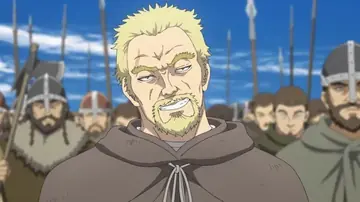
Study of psychological determinism, Machiavellian Virtù, the Artorius myth, and the invisible chains of human ambition.
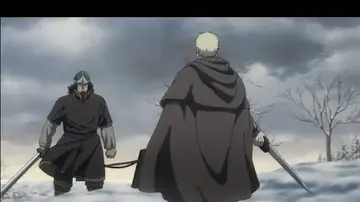
Analysis of the warrior’s loneliness, Berserkergang dissociation, and the final duel as the only form of intimacy in a violent world.
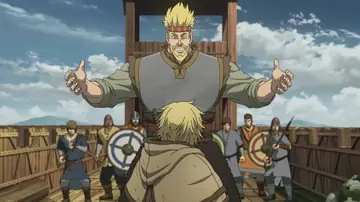
Explores martial nihilism, the boredom of the invincible, and why brute physical power can never solve the riddle of Thors.
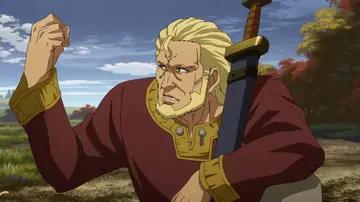
An analysis of Thorgil’s Darwinian realism: is violence man’s natural state, or an obsolete relic before the rise of the centralized State?
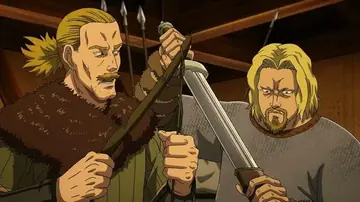
The banality of evil in the rank-and-file soldier: how war turns hungry farmers into accomplices of pillage and the miracle of desertion.
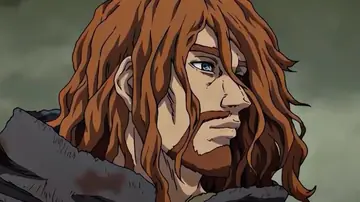
An analysis of alienation and trauma: what remains of a family man when the greed for iron strips away his home and freedom?
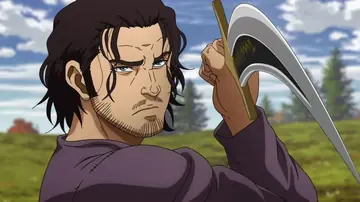
The educated veteran of Miklagard: judicial proportionality, tragic duty, and the lesson that reawakened Thorfinn's survival instinct.
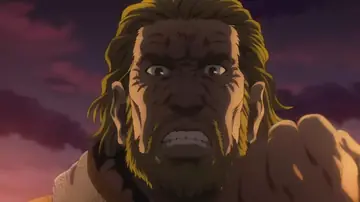
The fallacy of the "benevolent master," impostor syndrome behind the Iron Fist myth, and how moral cowardice breeds cruelty.
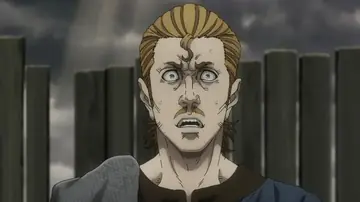
From imitative warrior masculinity to ethical maturity: why admitting defeat before Canute saved dozens of innocent lives.
Power, faith and statecraft: those who rule, those who preach, and the moral cost of building an empire.
6 long-form essays
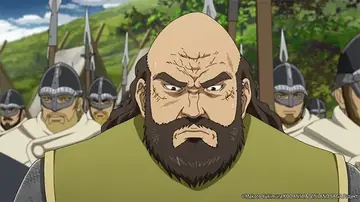
Analysis of Canute’s tutor: the paradox of paternal overprotection and Askeladd's psychological surgery to forge a sovereign.
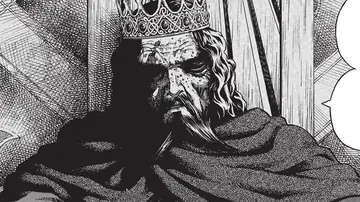
Hobbes's Leviathan in the North Sea: does the monarch command the empire, or does the crown ultimately devour the man?
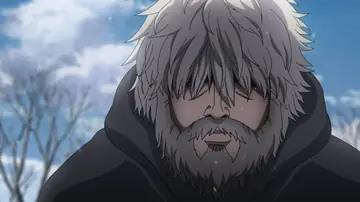
Demystifying heroic death, exposing Valhalla as an existential nightmare, and how grief transforms attachment into universal responsibility.
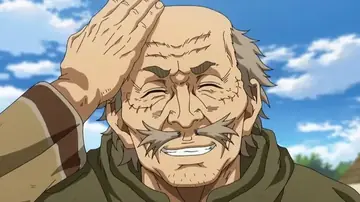
The merchant versus the conqueror: what it means to keep a promise for two decades to rescue Thorfinn from the abyss.
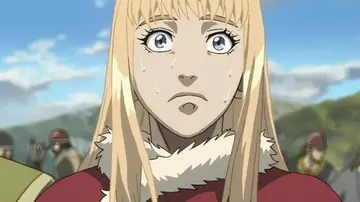
Theological analysis of Agape versus Eros and Storge, the parable of the corpse in the snow, and parallels with Augustine and Kierkegaard.
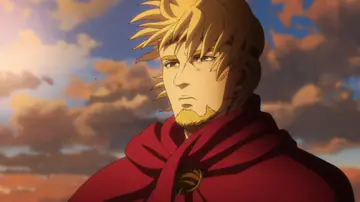
Political rebellion against God: is it possible to build paradise on earth through poison, expropriation, and absolute state control?
Peace, work and land: the moral reconstruction of humanity when weapons are laid down forever.
8 long-form essays
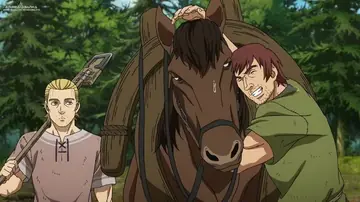
Comprehensive analysis of the Farmland Arc: the dream-descent into Valhalla, brotherhood with Einar, and Thorfinn's ethical rebirth.
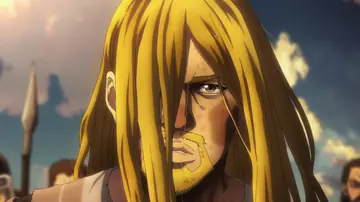
Analysis of endurance before Drott and Canute: why absorbing punishment to win a peace hearing demands tenfold more courage than killing.
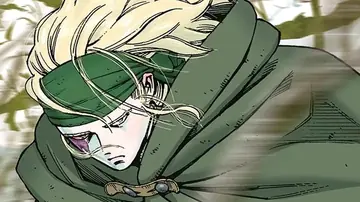
The cocked crossbow as Thorfinn's living conscience: the tension between legitimate vengeance and the miracle of restorative justice.

The foundational essay connecting Thors Snorresson's axiom with Greco-Roman Stoicism and game theory in conflict resolution.
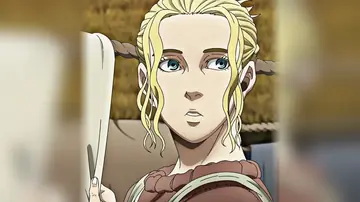
Female enslavement and shattered motherhood in the eleventh century: how Arnheid's death becomes the cornerstone of Vinland.
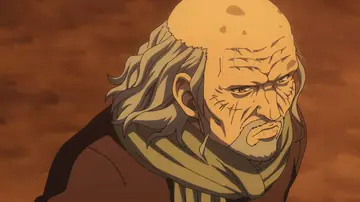
Agrarian wisdom and Stoic equanimity: why true wealth consists in owning nothing beyond what your own hands can plow.
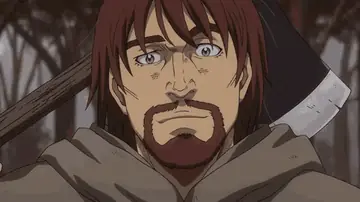
The dignity of the farmer versus warrior parasitism: cultivating wheat as therapy for the soul and community building.

The critical utopia of Vinland: the dilemma of self-defense, the ban on weapons, and the philosophy of the "First Resort."
It does not mean that dangerous aggressors do not exist, but rather that no human being is born with the ontological status of an "enemy." Enmity is a mental and political construct used to justify harming others. Once we recognize that no one is intrinsically our enemy, violence ceases to be an honorable duty and becomes a tragic failure that a true warrior strives to prevent through diplomacy, foresight, and the "First Resort."
Both seek to end reckless Viking bloodshed, yet they choose opposite paths. Canute adopts state utilitarianism (akin to Hobbes's Leviathan): monopolizing imperial force, levying heavy tribute, and eliminating political rivals to impose order from above. Thorfinn realizes that Canute's empire inevitably produces outcasts, slaves, and victims, so he sets out beyond the reach of the crown to build a horizontal community grounded in cooperative labor and the complete rejection of weapons.
Makoto Yukimura combines remarkable archaeological fidelity in daily life, shipcraft, and Norse architecture with a brilliant synthesis of medieval chronicles. Figures such as Thorkell the Tall, King Sweyn Forkbeard, Cnut the Great, Leif Erikson, and Thorfinn Karlsefni were real historical individuals whose campaigns in England (1002–1016) and Newfoundland (c. 1003–1010) are recorded in the Anglo-Saxon Chronicle and the Vinland sagas. See our year-by-year breakdown in the Historical Timeline.
Willibald contrasts selective human attachment—loving one's child, prince, or clan while remaining indifferent or cruel toward strangers—with divine Agape (universal, unconditional love exemplified by nature). When Ragnar shelters Canute at the cost of allowing an English village to be slaughtered, he illustrates how exclusive devotion to "our own" fuels warfare against everyone else.